
Nitric Acid Passivation
Nitric acid passivation is a widely used chemical surface treatment that enhances corrosion resistance in stainless steel by removing free iron and strengthening the material’s natural protective oxide layer. It is a proven method for improving surface stability and reducing the risk of corrosion in highly controlled industrial and manufacturing environments.
What Is Nitric Acid Passivation?
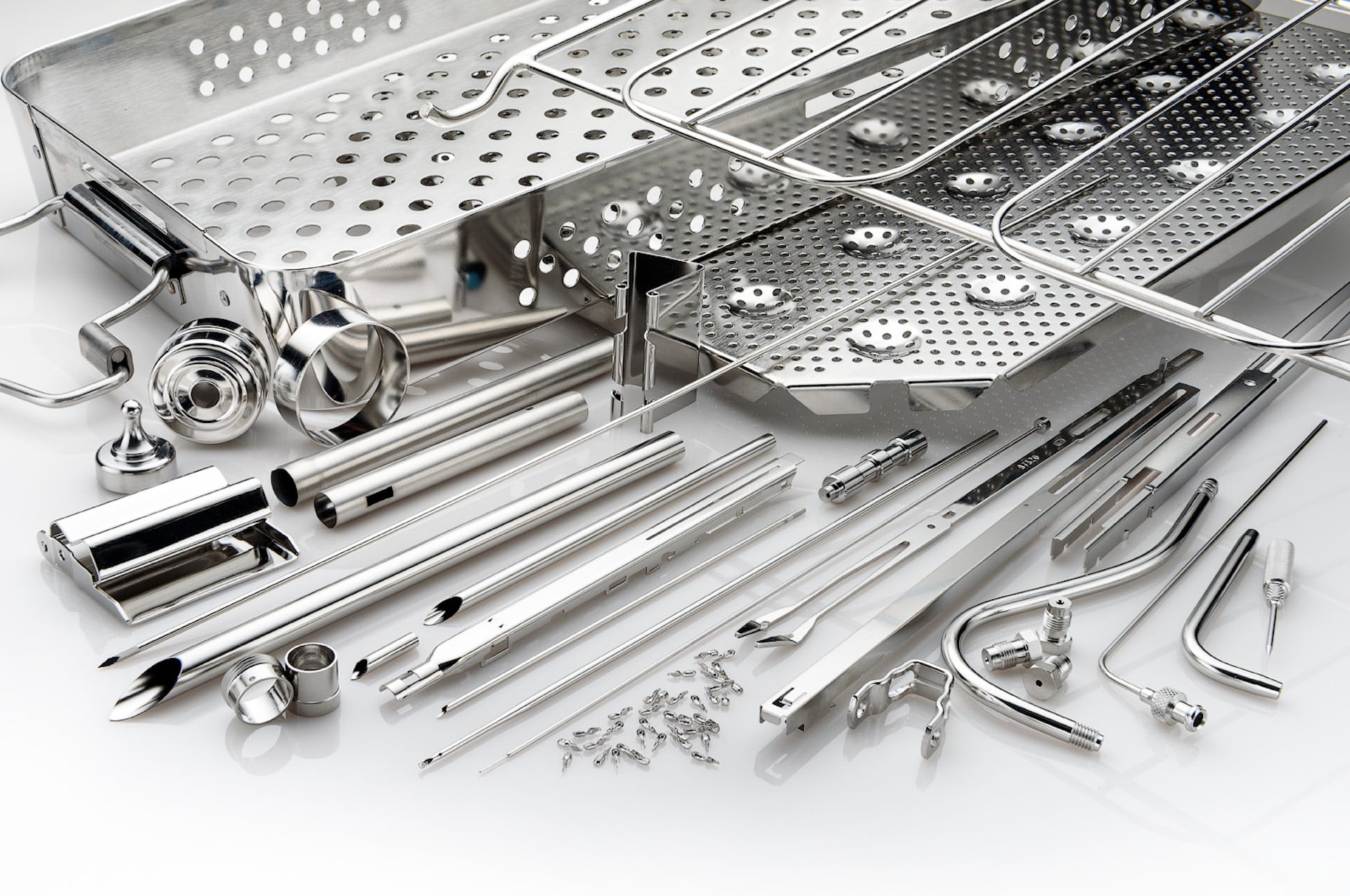
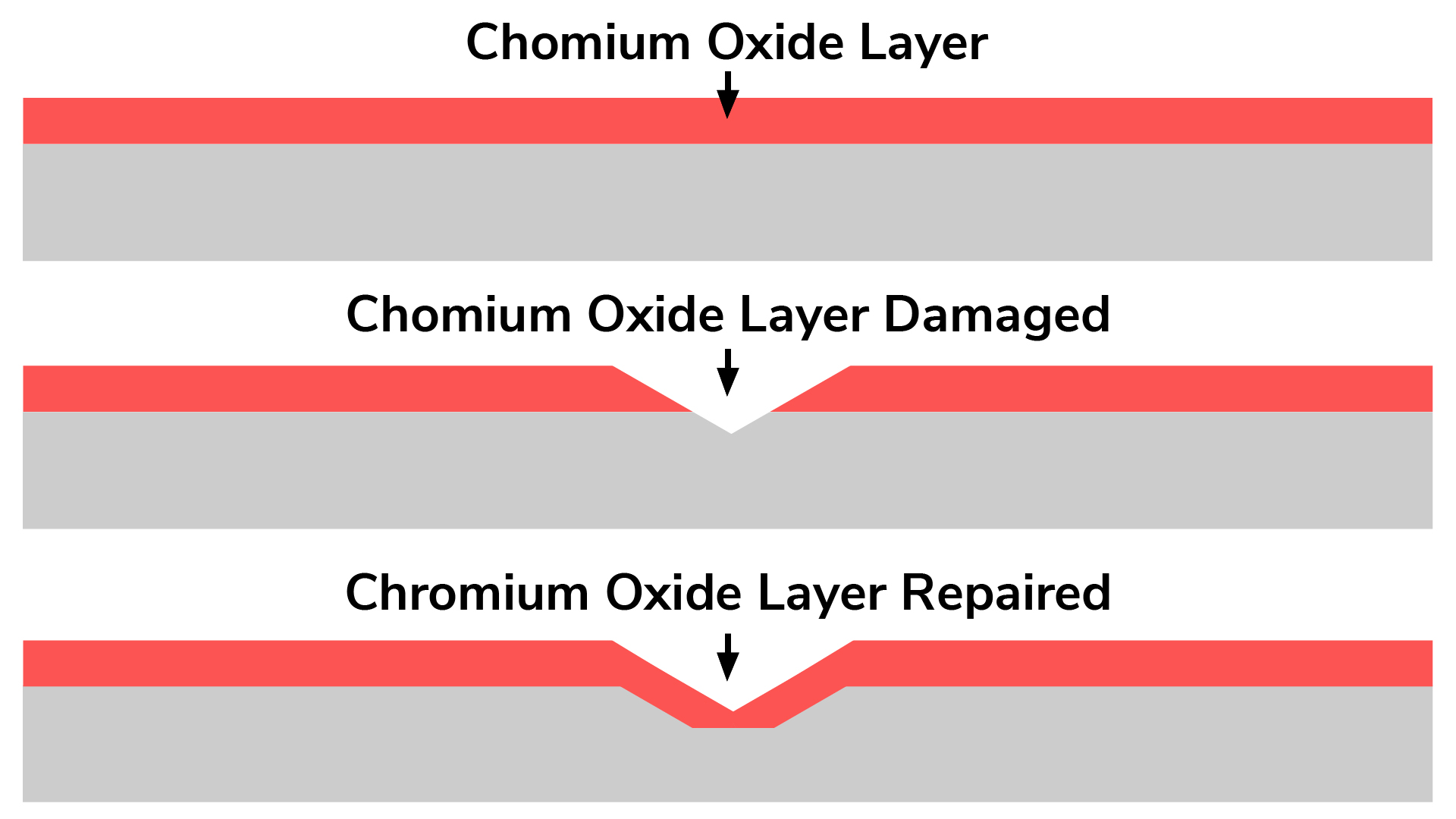
Nitric acid passivation is a controlled chemical process in which stainless steel components are immersed in a nitric acid solution to remove surface contaminants, such as free iron or machining residues. These contaminants can disrupt the formation of the chromium-rich oxide layer that gives stainless steel its corrosion resistance. By selectively dissolving these impurities, the process encourages the formation of a stable, passive surface that helps protect the metal from oxidation and corrosion.
Unlike coatings or platings, passivation does not deposit material onto the surface or affect part dimensions — it enhances the material’s inherent protective characteristics.
How Nitric Acid Passivation Works
The nitric acid passivation process typically includes several key steps:
-
Pre-Cleaning: Before passivation, parts are thoroughly cleaned to remove oils, greases, and machining debris that could interfere with the chemical reaction.
-
Acid Immersion: Parts are placed in a controlled concentration of nitric acid at a specified temperature and dwell time to dissolve free iron and surface contaminants.
-
Oxide Layer Formation: Post-treatment, the stainless steel naturally forms a chromium-rich oxide layer that is uniform and corrosion resistant.
-
Rinsing: A series of rinses (typically with deionized water) ensures all acid residues and dissolved contaminants are removed.
-
Drying: Parts are dried using methods appropriate to size, geometry, and sensitivity.
This controlled chemical interaction restores and improves the metal’s passive surface, helping it perform reliably in corrosive environments.
Benefits of Nitric Acid Passivation
Nitric acid passivation offers a range of benefits for stainless steel components:
-
Enhanced Corrosion Resistance: By removing free iron and surface contaminants, passivation promotes a stronger and more uniform passive film.
-
Improved Cleanability: A cleaner surface is easier to sanitize, which is critical for medical, food, biotech, and pharmaceutical applications.
-
No Dimensional Change: The chemical process does not abrade or mechanically alter the part, preserving tight tolerances and critical specifications.
-
Consistency and Repeatability: Controlled chemical processing ensures uniform results across large production runs.
-
Industry Compliance: Meets long-established passivation standards referenced in many engineering specifications and quality systems.
Nitric Acid vs. Citric Acid Passivation
Both nitric and citric acid methods are effective at enhancing the corrosion resistance of stainless steel, but they differ in chemistry and handling:
-
Nitric Acid Passivation: A traditional method often referenced in legacy standards. It is highly effective and widely accepted across industries but requires more stringent handling and disposal practices due to the stronger chemistry.
-
Citric Acid Passivation: A newer alternative with safety and environmental advantages. It is gentler to handle and provides an effective passivation result in many applications.
Choosing between nitric and citric acid passivation depends on industry requirements, regulatory standards, part geometry, material grade, and operational preferences.
Applications of Nitric Acid Passivation
Nitric acid passivation serves a broad range of industries and applications where corrosion resistance and surface cleanliness are essential:
-
Medical and Healthcare Manufacturing: Surgical instruments, implants, and sterile assemblies where surface integrity impacts safety.
-
Aerospace and Defense: Control hardware and fasteners exposed to extreme environments.
-
Semiconductor and Cleanroom Equipment: Components requiring low particulate and high surface stability.
-
Biotech and Pharmaceutical: Tanks, piping, and process equipment that undergo frequent washdowns and CIP/SIP.
-
Food and Beverage Processing: Sanitary systems where bacterial control and corrosion resistance are vital.
-
Industrial and Energy: Valves, flanges, heat exchangers, and fluid handling systems.
Standards and Quality Assurance
Nitric acid passivation is performed in accordance with recognized industry guidelines to ensure performance and repeatability. These include:
-
ASTM A967: Standard specification for chemical passivation treatments for stainless steel parts.
-
ASTM A380: Standard for cleaning, descaling, and passivation.
-
Industry-Specific Specs: AMS, ASME, and customer specifications may reference nitric acid passivation requirements.
At New England Electropolishing, our process controls, documentation, and quality systems ensure passivation is consistent, verifiable, and aligned with your specifications.
Is Nitric Acid Passivation Right for Your Parts?
If your components need reliable corrosion resistance, especially in regulated or critical applications, nitric acid passivation may be an effective solution — particularly when tight tolerances must be preserved and surfaces must remain clean and stable.
Our team can help evaluate your part geometry, material, and application environment to recommend the best passivation method for your needs.
Learn More About Passivation
To explore the core principles behind this surface treatment and why it matters for stainless steel performance, visit our general overview of the passivation of stainless steel:
👉 https://neelectropolishing.com/passivation-of-stainless-steel/