
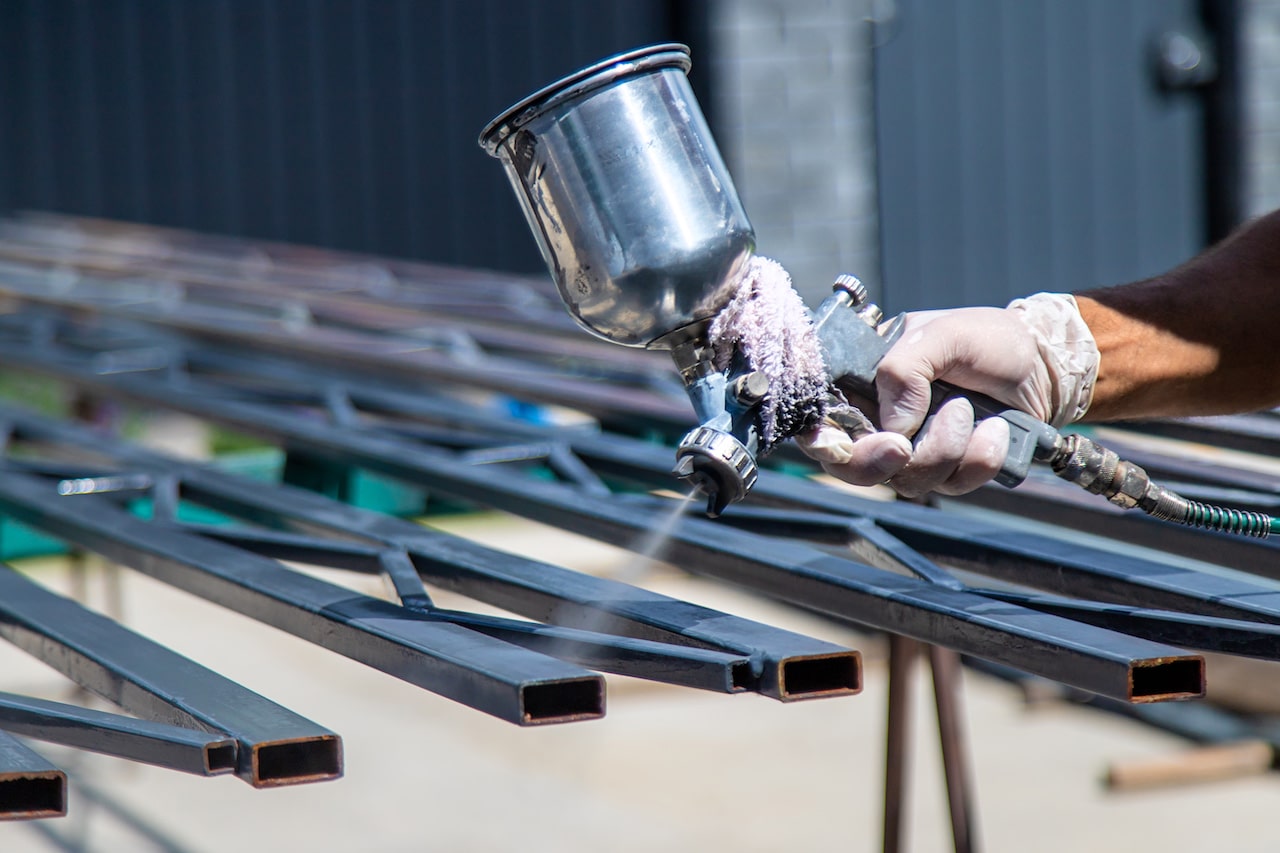
Paint Coatings
How Paint Coatings Protect Stainless Steel
Paint and protective coatings function by forming a sealed outer layer over the metal surface. This barrier reduces direct contact between the stainless steel and corrosive elements like:
- Water and humidity
- Salt spray
- Mild industrial chemicals
- Outdoor environmental exposure
If the coating remains intact, it can slow the onset of surface corrosion and provide cosmetic protection.
Where Paint Coatings Are Useful
Paint coatings may be appropriate in:
- Structural components in mild outdoor environments
- Equipment where color coding or branding is required
- Non-sanitary industrial settings
- Decorative architectural applications
- Areas where abrasion protection is more important than hygiene
In these general-purpose environments, coatings can extend service life and improve appearance without requiring chemical surface modification.
Limitations of Paint Coatings
While coatings can provide barrier protection, they come with important limitations:
1. They Do Not Provide Passivation
Paint coatings do not chemically enhance stainless steel. They do not remove free iron contamination, restore the chromium oxide layer, or improve the material’s natural corrosion resistance. Passivation is a chemical process that strengthens the stainless steel surface itself. Coatings simply cover it.
2. Vulnerability to Damage
If a coating chips, scratches, or wears away, the exposed stainless steel may corrode — sometimes more aggressively due to trapped moisture at the damaged interface.
3. Potential for Corrosion Under Coating
Once compromised, corrosion can spread underneath the coating, making it difficult to detect until significant degradation has occurred.
4. Not Ideal for Sanitary or High-Purity Environments
In industries such as medical, pharmaceutical, food processing, or biotech manufacturing, coatings are generally not preferred. These sectors require cleanable, chemically stable surfaces rather than layered finishes that may degrade over time.
5. Maintenance and Reapplication
Coatings may require periodic inspection, repair, or complete reapplication — increasing long-term maintenance costs.
Paint Coatings vs. Stainless Steel Surface Treatments
It’s important to distinguish between barrier protection and surface enhancement:
Paint Coatings: Provide external protection by covering the metal.
Passivation: Removes free iron and promotes formation of a protective chromium-rich oxide layer.
Electropolishing: Smooths and refines the surface while enhancing corrosion resistance and cleanability.
Unlike coatings, passivation and electropolishing improve the metal itself — not just its appearance or surface coverage.
Choosing the Right Approach
For non-critical applications where general environmental protection or aesthetics are the primary concern, paint coatings can be a practical solution. However, for applications requiring high corrosion resistance, hygienic surfaces, regulatory compliance, or long-term durability, chemical treatments such as passivation or electropolishing are typically more appropriate.
Selecting the right corrosion protection method depends on the environment, performance requirements, maintenance expectations, and industry standards involved.
The Bottom Line
Paint coatings have their place in corrosion protection strategies, particularly in general industrial or architectural settings. But they are not a substitute for passivation and do not enhance the inherent corrosion resistance of stainless steel. When surface integrity and long-term performance matter, treatments that strengthen the metal itself offer a fundamentally different level of protection.