What Grades of Stainless Steel Need Passivation?
The short answer is many stainless steel grades can benefit from passivation, especially after machining, welding, fabrication, or exposure to contaminants during manufacturing. Whether a part should be passivated depends not only on the grade of stainless steel, but also on the application, operating environment, and how the component was processed.
Understanding Passivation
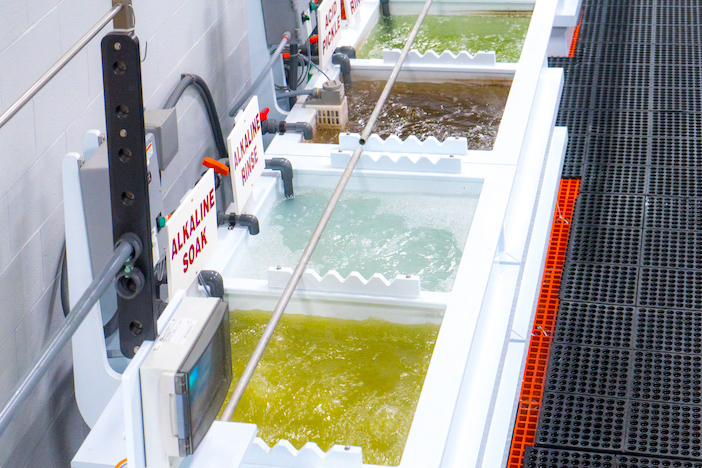
What is passivation? Passivation is a chemical treatment that removes free iron, shop contamination, and surface impurities from stainless steel. Once these contaminants are removed, the chromium in the alloy reacts with oxygen to form a thin, protective oxide layer that helps resist rust and corrosion. Common methods include citric acid passivation and nitric acid passivation but passivation can also be accomplished through electropolishing.
This process is especially valuable after manufacturing steps such as:
- CNC machining
- Turning or milling
- Grinding or polishing
- Welding and heat tint removal
- Forming and fabrication
- Handling with carbon steel tooling
- Exposure to shop debris or contamination
Even high-quality stainless steel can benefit from passivation if the surface has been disturbed during production.
Does 304 Stainless Steel Need Passivation?
304 stainless steel is one of the most common grades used in food processing, architecture, medical equipment, and general fabrication. It offers strong corrosion resistance, but machining and welding can introduce contaminants that reduce performance.
Passivation is often recommended for 304 stainless steel when:
- Components are used in wet or humid environments
- Cleanability is important
- Cosmetic appearance matters
- Welded or fabricated assemblies are involved
- Long-term corrosion resistance is required
For many commercial and industrial parts, passivation helps 304 maintain its full potential.
Does 316 Stainless Steel Need Passivation?
316 stainless steel contains molybdenum, giving it better resistance to chlorides, salt, and harsh chemicals than 304. It is commonly used in marine, pharmaceutical, food-grade, and medical applications.
Even though 316 is highly corrosion resistant, passivation is still commonly used—especially when:
- Parts are exposed to saltwater or coastal environments
- Sanitary or sterile surfaces are required
- Components are machined or welded
- Maximum corrosion resistance is critical
In many demanding applications, passivation is considered best practice for 316 stainless steel.
Does 17-4 Stainless Steel Need Passivation?
17-4 PH stainless steel is a precipitation-hardening grade known for high strength and good corrosion resistance. It is widely used in aerospace, defense, valves, shafts, and precision components.
Because 17-4 is often heavily machined and heat treated, passivation can be beneficial to remove surface contamination and support corrosion resistance.
Passivation is commonly recommended when:
- Tight tolerance machined parts are produced
- Components operate in corrosive environments
- Surface cleanliness is important
- Long-term durability is required
For critical performance parts, passivation is often part of the finishing process.
Does 400 Series Stainless Steel Need Passivation?
400 series stainless steels (such as 410, 420, 430) generally contain less nickel and may have lower corrosion resistance than 300 series grades. Some are magnetic and chosen for hardness, wear resistance, or cost advantages.
Because these grades can be more prone to staining or rust depending on conditions, passivation may be especially valuable after machining or fabrication.
Typical applications include:
- Fasteners
- Cutlery
- Pump components
- Industrial hardware
- Wear-resistant parts
For 400 series materials, passivation can help improve surface performance, though results depend on the exact alloy and use environment.
Application Matters More Than Grade Alone
The most important factor is not just the alloy number—it’s how the part will be used.
Questions to ask include:
- Will the part be exposed to moisture or chemicals?
- Is it used in food, medical, or sanitary environments?
- Was it machined, welded, or ground?
- Are appearance and cleanliness important?
- Is long service life required?
A 304 bracket in a dry indoor setting may need less protection than a 316 valve used near saltwater. A machined 17-4 shaft may benefit more than a raw mill-finish plate.
When Should Stainless Steel Be Passivated?
Passivation is commonly performed:
- After machining
- After welding
- Before final assembly
- Prior to cleanroom or sanitary use
- Before shipment for corrosion-sensitive applications
It is often one of the final finishing steps before delivery.
The Bottom Line
304, 316, 17-4, and many 400 series stainless steels can all benefit from passivation depending on the application and how the material was processed. Machining, welding, fabrication, and contamination during production can reduce corrosion resistance—even on premium alloys.
Passivation helps restore the protective surface layer, improve corrosion resistance, and prepare components for long-term performance.
If you’re unsure whether your stainless steel parts should be passivated, the best answer depends on the grade, manufacturing method, and service environment.
Electropolishing Resources
What is Electropolishing?
Electropolishing is an electrochemical and reverse plating process that removes the outer layer of skin on a metal...
The Electropolishing Process
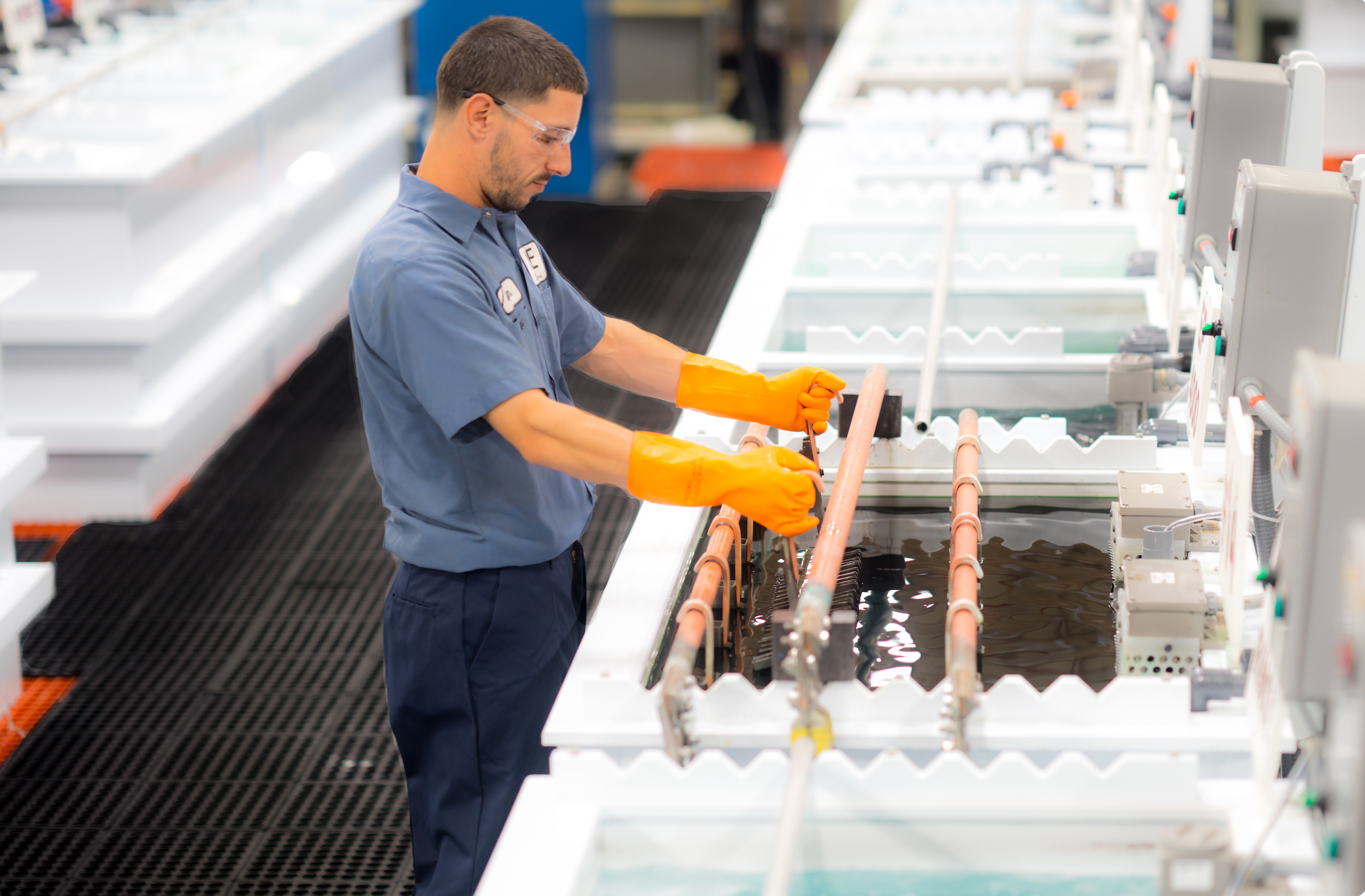
The electropolishing process is initiated by immersing a metal part into a temperature-controlled bath of electrolyte...
Benefits of Electropolishing
Curious about the benefits of putting your parts through the electropolishing process? Read along below where we...
How Much Material Does Electropolishing Remove?
Electropolishing, when done properly is a highly controllable process which removes as little as...
How Much Will Electropolishing Improve the Surface Finish of My Part?
Ra and RMS are both representations of surface roughness. Ra is calculated as the roughness average of a surface’s...
Electropolishing Frequently Asked Questions
Learn the difference between electropolishing and electroplating as well as how the electropolishing process works...
Electropolishing vs. Passivation
What is ASTM B912?
ASTM B912 is an industry standard for the passivation of stainless steel alloys through electropolishing...
What is ASTM A967?
ASTM A967 is an industry standard specification for the chemical passivation treatments for stainless...
What is ISO 13485?
ISO 13485 is a standard that applies specifically to medical devices. ISO 13485 is designed to be...