
Case Study: Citric Acid Passivation of Stainless Steel Orthopedic Components
A medical device manufacturer approached New England Electropolishing with a finishing requirement for a precision-machined stainless steel component used in an orthopedic device. Because the component would be exposed to demanding cleaning and sterilization conditions, the manufacturer required a controlled passivation process to maximize corrosion resistance and maintain a clean, consistent surface.
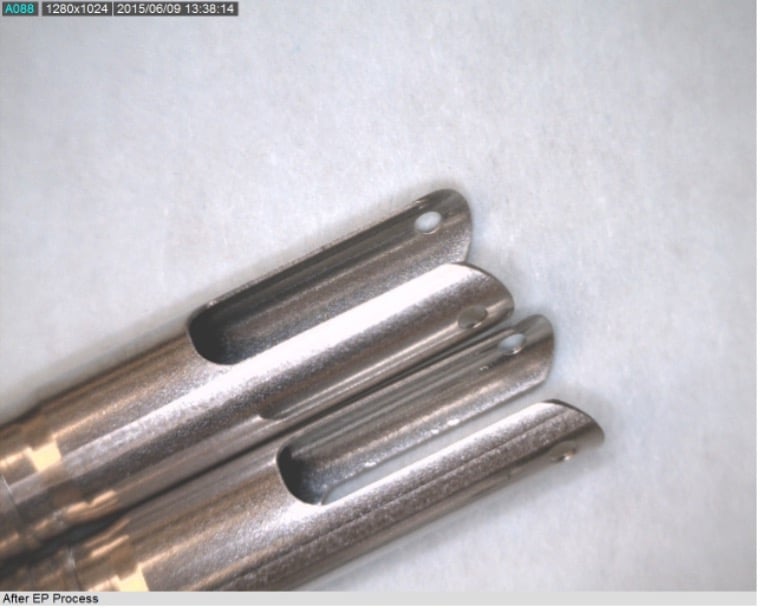
Improving Corrosion Resistance and Surface Cleanliness for a Precision Medical Device Component
The component’s complex geometry and tight dimensional requirements also meant that the finishing process needed to remove surface contaminants without adversely affecting critical features.
The Challenge
The orthopedic component was manufactured from stainless steel and underwent precision machining prior to finishing. As with many machined stainless steel components, manufacturing operations can introduce free iron, machining residues, oils and other contaminants onto the surface.
For an orthopedic medical device, controlling these contaminants is particularly important. The finished component must maintain its corrosion resistance and surface integrity through subsequent manufacturing, cleaning and sterilization processes.
The manufacturer needed a passivation process that would:
- Remove free iron and surface contaminants
- Promote formation of the stainless steel’s passive chromium oxide layer
- Maintain critical dimensions and tolerances
- Provide a clean, consistent surface
- Support the component’s demanding medical application
- Deliver repeatable results from batch to batch
The Solution: Citric Acid Passivation
New England Electropolishing developed a controlled citric acid passivation process for the components.
Citric acid passivation is well suited for many medical-device applications because it selectively removes free iron and other surface contaminants while allowing the stainless steel to develop its naturally protective passive oxide layer. NEE’s existing process includes thorough pre-cleaning, controlled immersion in a citric acid bath, rinsing and final quality verification.
1. Pre-Cleaning
Before passivation, the components were thoroughly cleaned to remove machining oils, grease, particulate and other manufacturing residues.
This step was critical to ensure the stainless steel surface was properly prepared for the passivation treatment.
2. Citric Acid Passivation
The cleaned components were immersed in a controlled citric acid passivation bath.
The process was designed to remove free iron and surface contaminants without unnecessarily attacking the base material. Following treatment, the stainless steel was able to naturally re-establish its chromium-rich passive oxide layer.
3. Rinsing and Drying
After passivation, the components underwent controlled rinsing to remove residual processing chemistry.
Careful drying helped prevent the introduction of new contamination or water spotting before final inspection.
4. Final Inspection
The finished components were inspected to verify surface condition, cleanliness and dimensional integrity.
The controlled process provided consistent results across the production batch while maintaining the component’s critical features.
The Result
The citric acid passivation process provided the orthopedic component manufacturer with a clean, consistently passivated stainless steel surface designed to improve corrosion resistance without compromising the component’s precision.
The finished components were:
- Passivated and corrosion resistant
- Free of significant surface iron contamination
- Clean and ready for subsequent manufacturing operations
- Dimensionally consistent
- Suitable for the demanding requirements of orthopedic medical-device manufacturing
The result was a repeatable finishing process that could be incorporated into the manufacturer’s production workflow.
Why Citric Acid Passivation for Orthopedic Components?
Orthopedic components often require a combination of precision, cleanliness, corrosion resistance and repeatability. Citric acid passivation can be an effective finishing solution when the goal is to remove free iron and contaminants while preserving the underlying stainless steel surface.
For manufacturers producing orthopedic devices and other medical components, the passivation process should be selected based on the alloy, manufacturing history, geometry, cleanliness requirements and applicable specifications.
New England Electropolishing works with medical-device manufacturers to develop and control stainless steel finishing processes for precision components, including orthopedic applications. NEE’s capabilities include both citric and nitric acid passivation as well as electropolishing, allowing the finishing process to be matched to the specific requirements of the component.
Need a Passivation Process for an Orthopedic Component?
Send New England Electropolishing a sample part. Our team can evaluate the component and help determine the appropriate stainless steel finishing process for your application.
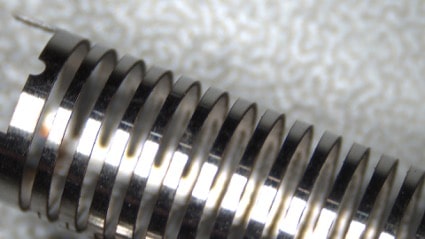
1. Raw Laser-Cut Condition
The stents arrived in their as-laser-cut condition, with visible slag, dross, and heat-affected material remaining around the cut features.
The intricate geometry made mechanical access difficult, requiring a finishing approach that could address contamination without damaging the delicate structure of the component.
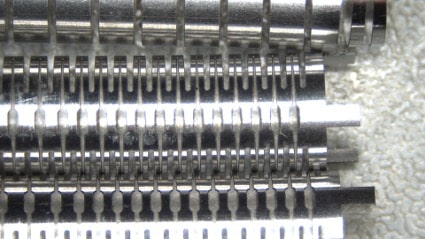
2. Acid Pickling
The first treatment stage was acid pickling, which helped attack and remove oxides and other laser-related surface contamination left behind by the cutting process.
This step helps to prepare the stainless steel surface for subsequent electrochemical cleaning and surface finishing.
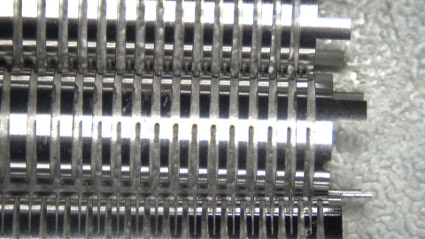
3. Electrocleaning
Following pickling, the components underwent electrocleaning to further remove residual contaminants and prepare the surface for electropolishing.
Electrocleaning is particularly useful as a surface preparation step because it helps ensure the component is sufficiently clean and active before the final electrochemical finishing process.
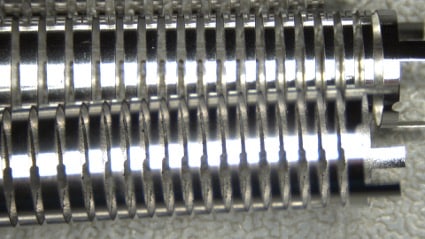
4. Electropolishing
The final stage was electropolishing, which removed a controlled amount of material from the stainless steel surface while refining the overall finish.
For these highly intricate components, electropolishing provided the final level of surface refinement needed to produce a cleaner, smoother, and more uniform surface.
Laser Slag Removal Resources
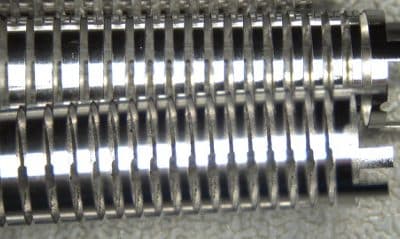
A medical device manufacturer approached New England Electropolishing with a challenging application involving laser-cut stainless steel stents. The intricate geometry...
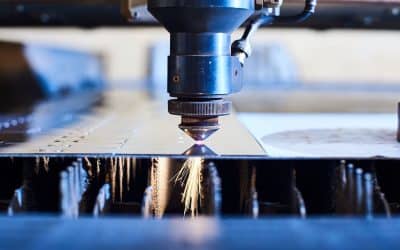
Laser cutting can produce precise stainless steel components with complex geometries, but it can also create a secondary finishing challenge. Depending on alloy,...
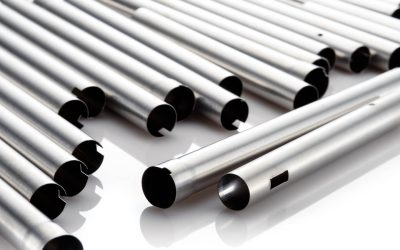
A medical device manufacturer approached New England Electropolishing with a challenging finishing requirement involving laser-cut stainless steel tubing. The...
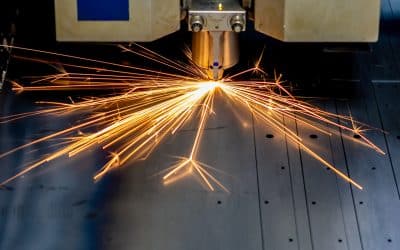
Laser cutting is one of the most efficient and precise methods for fabricating stainless steel components, but the process can leave behind more than just clean cut...
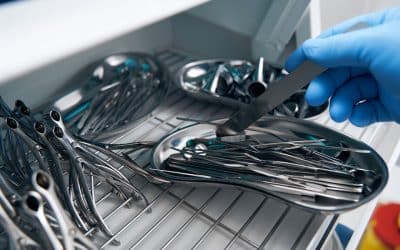
In precision manufacturing, even the smallest surface imperfection can create outsized problems. Burrs—those tiny raised edges or fragments of metal left behind after...
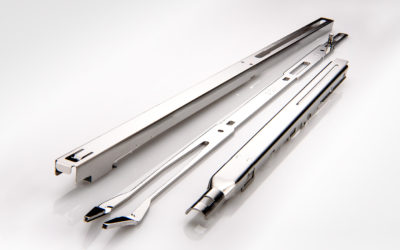
Laser Slag Removal for Medical Parts Electropolishing is an electro-chemical process that can help to remove "laser slag" - a heat affected zone left behind from the...