
Case Study: Multi-Process Laser Slag Removal and Electropolishing of Stainless Steel Stents
A medical device manufacturer approached New England Electropolishing with a challenging application involving laser-cut stainless steel stents. The intricate geometry and extremely small features of the components made surface preparation particularly important, while the laser cutting process had left behind slag, dross, and heat-affected material that needed to be removed before final finishing.
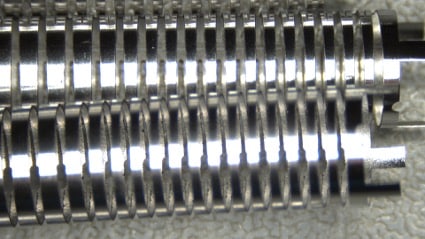
Removing Laser Slag and Preparing Complex Medical Components for Electropolishing
For a component this small and complex, simply moving directly from laser cutting to electropolishing would not necessarily provide the desired result. The surface first needed to be properly prepared and cleaned.
A Multi-Stage Approach
NEE developed a progressive finishing process that allowed the condition of the component to be evaluated and improved at each stage.
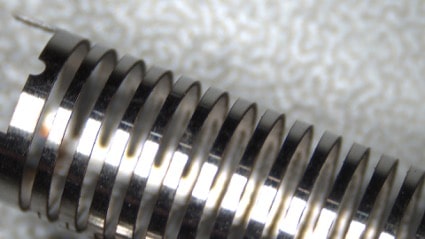
1. Raw Laser-Cut Condition
The stents arrived in their as-laser-cut condition, with visible slag, dross, and heat-affected material remaining around the cut features.
The intricate geometry made mechanical access difficult, requiring a finishing approach that could address contamination without damaging the delicate structure of the component.
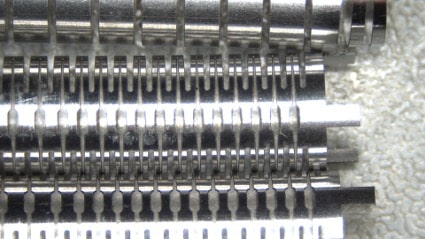
2. Acid Pickling
The first treatment stage was acid pickling, which helped attack and remove oxides and other laser-related surface contamination left behind by the cutting process.
This step helps to prepare the stainless steel surface for subsequent electrochemical cleaning and surface finishing.
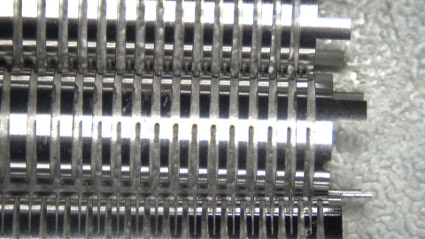
3. Electrocleaning
Following pickling, the components underwent electrocleaning to further remove residual contaminants and prepare the surface for electropolishing.
Electrocleaning is particularly useful as a surface preparation step because it helps ensure the component is sufficiently clean and active before the final electrochemical finishing process.
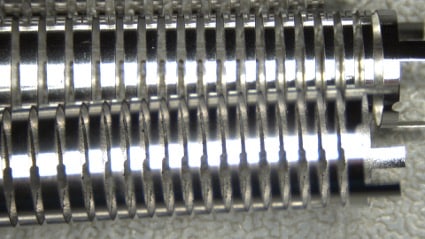
4. Electropolishing
The final stage was electropolishing, which removed a controlled amount of material from the stainless steel surface while refining the overall finish.
For these highly intricate components, electropolishing provided the final level of surface refinement needed to produce a cleaner, smoother, and more uniform surface.
Laser Slag Removal Resources
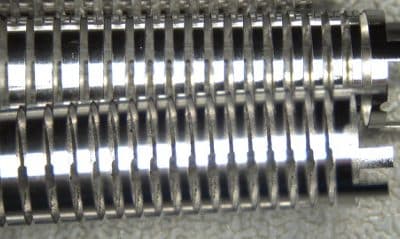
A medical device manufacturer approached New England Electropolishing with a challenging application involving laser-cut stainless steel stents. The intricate geometry...
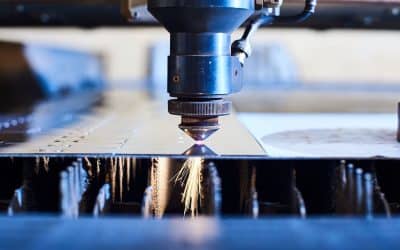
Laser cutting can produce precise stainless steel components with complex geometries, but it can also create a secondary finishing challenge. Depending on alloy,...
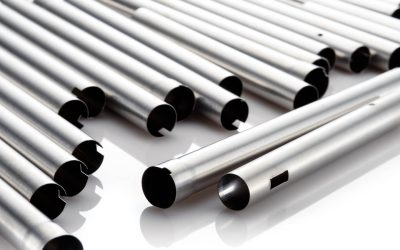
A medical device manufacturer approached New England Electropolishing with a challenging finishing requirement involving laser-cut stainless steel tubing. The...
Laser cutting is one of the most efficient and precise methods for fabricating stainless steel components, but the process can leave behind more than just clean cut...
In precision manufacturing, even the smallest surface imperfection can create outsized problems. Burrs—those tiny raised edges or fragments of metal left behind after...
Laser Slag Removal for Medical Parts Electropolishing is an electro-chemical process that can help to remove "laser slag" - a heat affected zone left behind from the...